
Quick Answer: Most small business websites can start with around 5 to 10 core pages, but there is no perfect number for every business. The right page count depends on your services, locations, customer questions, and how many topics deserve their own useful page. A focused 7 page website can outperform a 30 page website filled with thin content.
More pages do not automatically mean better SEO.
A better question is:
How many useful pages does my business actually need?
That is what matters.
Is There an Ideal Number of Pages for a Small Business Website?
No.
A consultant with one main service may only need five or six pages.
A local service company with several services and multiple locations may need 15 or more.
An ecommerce business could need hundreds.
For many small service businesses, 5 to 10 pages is a practical starting point.
You can expand later as the business grows.
What Pages Should a Small Business Website Have?
Most small businesses need a few core pages.
Home
Your homepage should quickly explain:
- what you do
- who you help
- where you operate
- why customers should choose you
- what they should do next
About
Use this page to build trust.
Include real information about the company, experience, team, background, qualifications, or how you work.
Services
A main Services page can give visitors an overview.
If you offer several important services, those services may also need their own pages.
Contact
Make it easy to call, email, submit a form, or book.
Do not make ready to buy customers search for contact information.
Legal Pages
Depending on your business and location, you may also need pages such as:
- Privacy Policy
- Terms
- Cookie Policy
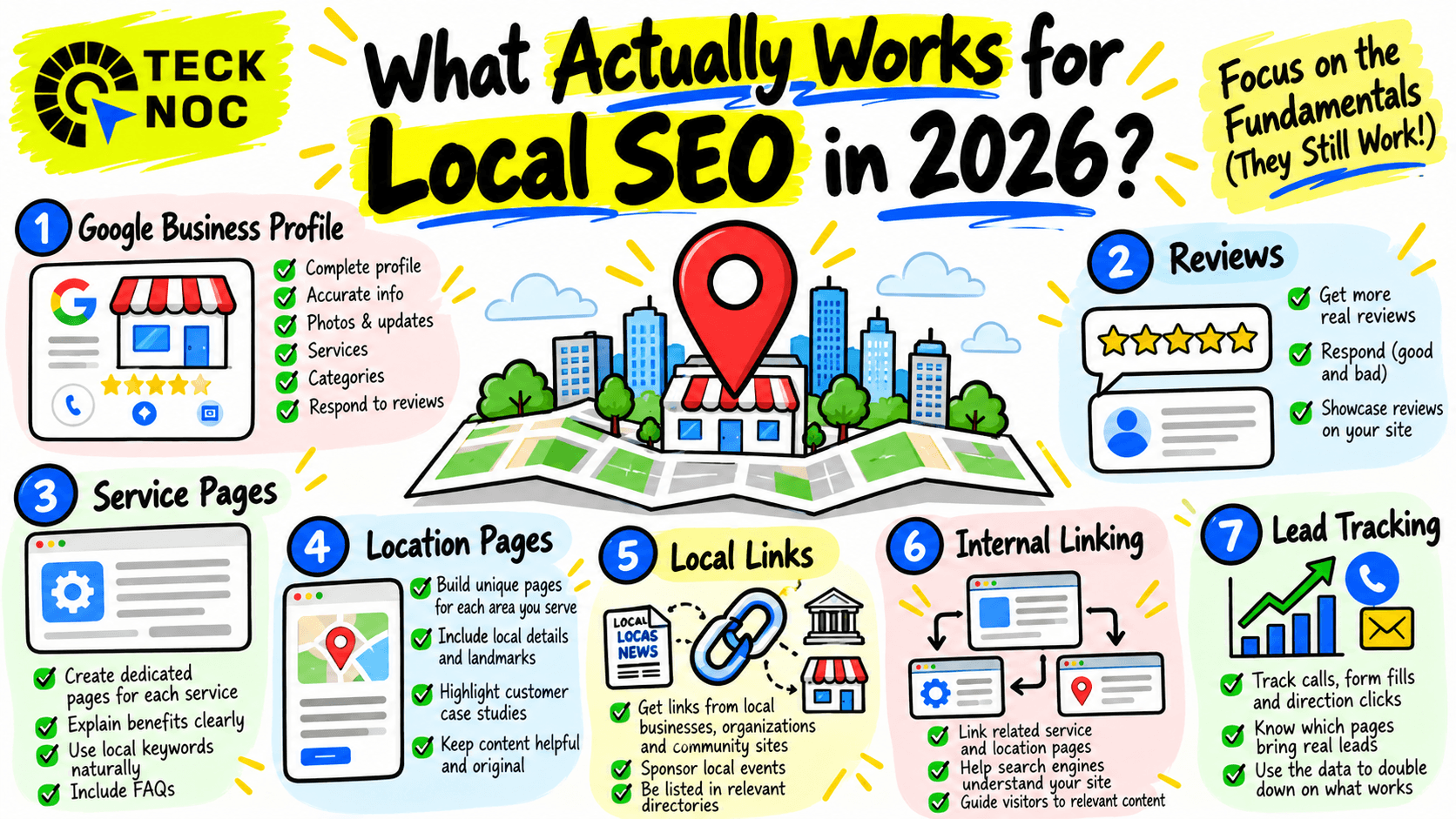
For a broader look at website planning, see our guide to professional web design services.
Should Every Service Have Its Own Page?
Often, yes.
If customers search for a service separately, it usually deserves its own page.
For example, instead of one page covering:
- plumbing
- drain cleaning
- boiler repair
- bathroom installation
you could create:
/plumbing/
/drain-cleaning/
/boiler-repair/
/bathroom-installation/
This gives each service enough room to explain:
- what it includes
- who it is for
- common questions
- pricing factors
- next steps
The key is different search intent.
If two services are almost identical, they may not need separate pages.
Do More Website Pages Help SEO?
Not automatically.
More pages can create more ranking opportunities only when they cover genuinely different topics.
A 50 page website with 40 weak pages is not stronger than a 10 page website with useful content.
For example, a landscaping company may need separate pages for:
- patios
- fencing
- artificial grass
- garden design
Those are distinct services.
Creating five pages for minor wording variations of the same patio service adds little value.
Good organic search marketing is about matching useful pages to real search intent.
When Does a Business Need Location Pages?
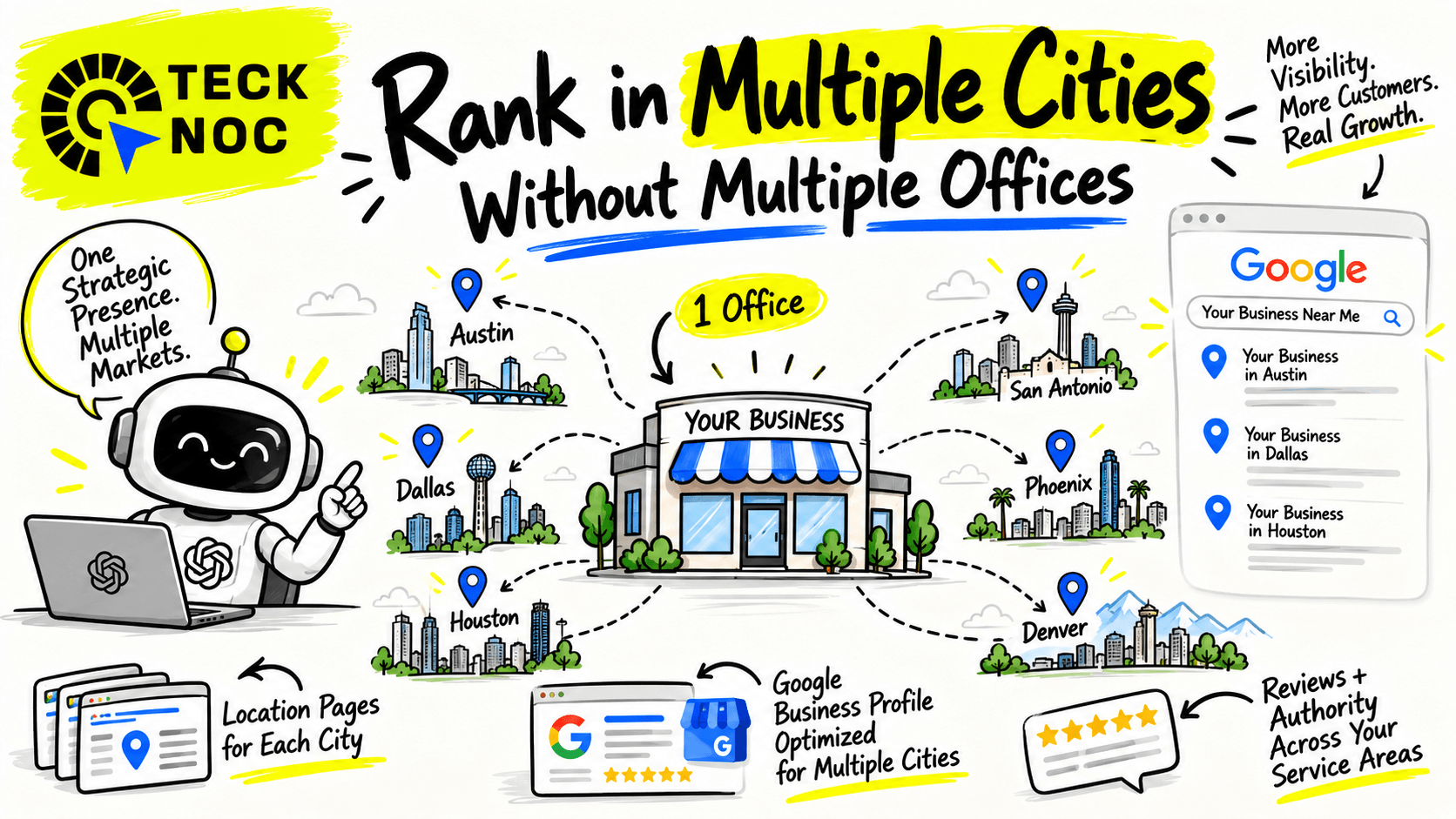
Location pages can make sense when you genuinely serve several important areas.
For example, an Austin HVAC company may also serve:
- Round Rock
- Cedar Park
- Pflugerville
- Georgetown
It may be useful to create dedicated pages for those markets.
But each page needs unique local value.
Do not copy the Austin page and simply replace the city name.
A useful location page can include:
- services available there
- neighborhoods covered
- local customer questions
- relevant projects
- testimonials
- service area details
Our guide to ranking in multiple cities explains this in more detail.
Can a Website Have Too Many Pages?
Yes, if the pages are unnecessary.
Problems usually start when pages:
- target the same search intent
- repeat the same information
- provide very little value
- compete for similar keywords
- make the website harder to navigate
The issue is not the number itself.
The issue is whether each page has a clear purpose.
If two pages do the same job, consider combining them.
Is a One Page Website Enough?
Sometimes.
A one page website may work for:
- a freelancer with one service
- an event
- a simple startup
- a temporary campaign
- a single product
But it becomes limiting when you have:
- several services
- multiple locations
- case studies
- strong SEO goals
- different customer types
For most established businesses, a multi page structure is easier for both users and search engines to understand.
Do Blog Posts Count as Website Pages?
Yes.
But blog posts should not exist just to increase the page count.
A useful blog supports your main services.
For example, an SEO company may have:
Main page: SEO Services
Supporting blogs:
- how long SEO takes
- SEO vs paid search
- local ranking factors
- why rankings change
That creates topic depth.
The number of posts matters less than whether they answer real questions.
When Should You Create a Separate Page?
Before creating a new page, ask four questions:
1. Does this topic have its own search intent?
Would someone specifically search for it?
2. Can I provide enough useful information?
If the page would only contain a few short paragraphs, it may belong inside another page.
3. Does the visitor need a different answer or action?
Someone looking for emergency plumbing has different needs from someone planning a bathroom renovation.
4. Will the page make the website easier to understand?
If yes, create it.
If the page exists only because you want another URL, do not.
What Does a Good Small Business Website Structure Look Like?
Imagine a landscaping company in Austin.
A sensible structure could be:
Home
About
Services
Landscaping
Patios
Artificial Grass
Garden Design
Projects
Areas We Serve
Contact
That is around 10 pages before blogs or city pages.
Now compare that with a consultant offering one specialist service:
Home
About
Service
Case Studies
Contact
Both can be completely appropriate.
The structure should follow the business.
For more on planning a small business site, see our guide to web design for small businesses.
What About Websites With Hundreds of Pages?
Large websites are not a problem when the pages serve a real purpose.
Ecommerce stores may need product pages.
Directories may need listing pages.
Businesses with many locations may need location pages.
Some companies use programmatic SEO to manage large groups of legitimate pages.
The important part is that the pages still provide useful information.
Scale is not the problem.
Low value scale is.
Page Count Should Also Support Conversions
SEO is only part of the job.
A visitor usually wants to know:
- what you offer
- whether you serve them
- whether they can trust you
- what happens next
- how to contact you
Too few pages can leave important questions unanswered.
Too many poorly organized pages can make the site confusing.
The goal is clarity.
That is also why conversion rate optimization for local businesses matters. Traffic is only useful when the website helps visitors take action.
How Many Pages Should You Launch With?
For many small service businesses, 5 to 10 strong pages is a good starting point.
Launch the pages customers need now.
Then add new pages when there is a clear reason, such as:
- a new service
- a new location
- a case study
- a useful comparison
- a customer question
- a valuable blog topic
Do not wait until you have 50 pages to launch.
And do not stop at five forever if the business needs more.
Final Thoughts: How Many Pages Should a Website Have?
A website should have as many pages as it needs to give every important service, location, and customer question a useful place to live.
For many small businesses, that starts with 5 to 10 core pages.
Some need fewer.
Others need much more.
The number is not the goal.
Useful structure is.
A focused website with strong service pages, simple navigation, clear internal links, and useful calls to action will usually be more valuable than a larger website filled with unnecessary content.
Need Help Planning Your Small Business Website?
A good website structure starts with understanding what customers need to find and what the business needs to rank for.
TeckNoc helps businesses plan websites around services, search intent, conversion goals, and long term growth.
Our guide to professional web design services explains what a properly planned website should include.
For businesses that need website strategy alongside SEO, content, paid search, and customer acquisition, TeckNoc also works as a digital marketing company in Texas.
FAQs
How many pages should a small business website have?
Most small business websites can start with around 5 to 10 core pages. Businesses with several services, locations, products, or customer groups may need more.
Is a 5 page website enough for a small business?
Yes, for a simple business. A homepage, About page, service page, contact page, and one supporting page may be enough to start.
Does having more pages help SEO?
Only when the additional pages cover useful and distinct topics. More pages do not improve SEO automatically.
Should every service have its own website page?
Usually, if customers search for the service separately and there is enough useful information to justify a dedicated page.
Is a one page website bad for SEO?
Not automatically, but it can limit how clearly a business targets several services, locations, or search topics.
How many pages do I need to rank on Google?
There is no minimum page count. Relevance, usefulness, technical quality, authority, and search intent matter more than total pages.
Do blog posts count as website pages?
Yes, but blogs should answer useful questions rather than exist simply to increase page count.
Can too many website pages hurt SEO?
The number itself is not the issue. Problems occur when pages are thin, repetitive, overlapping, or difficult to navigate.