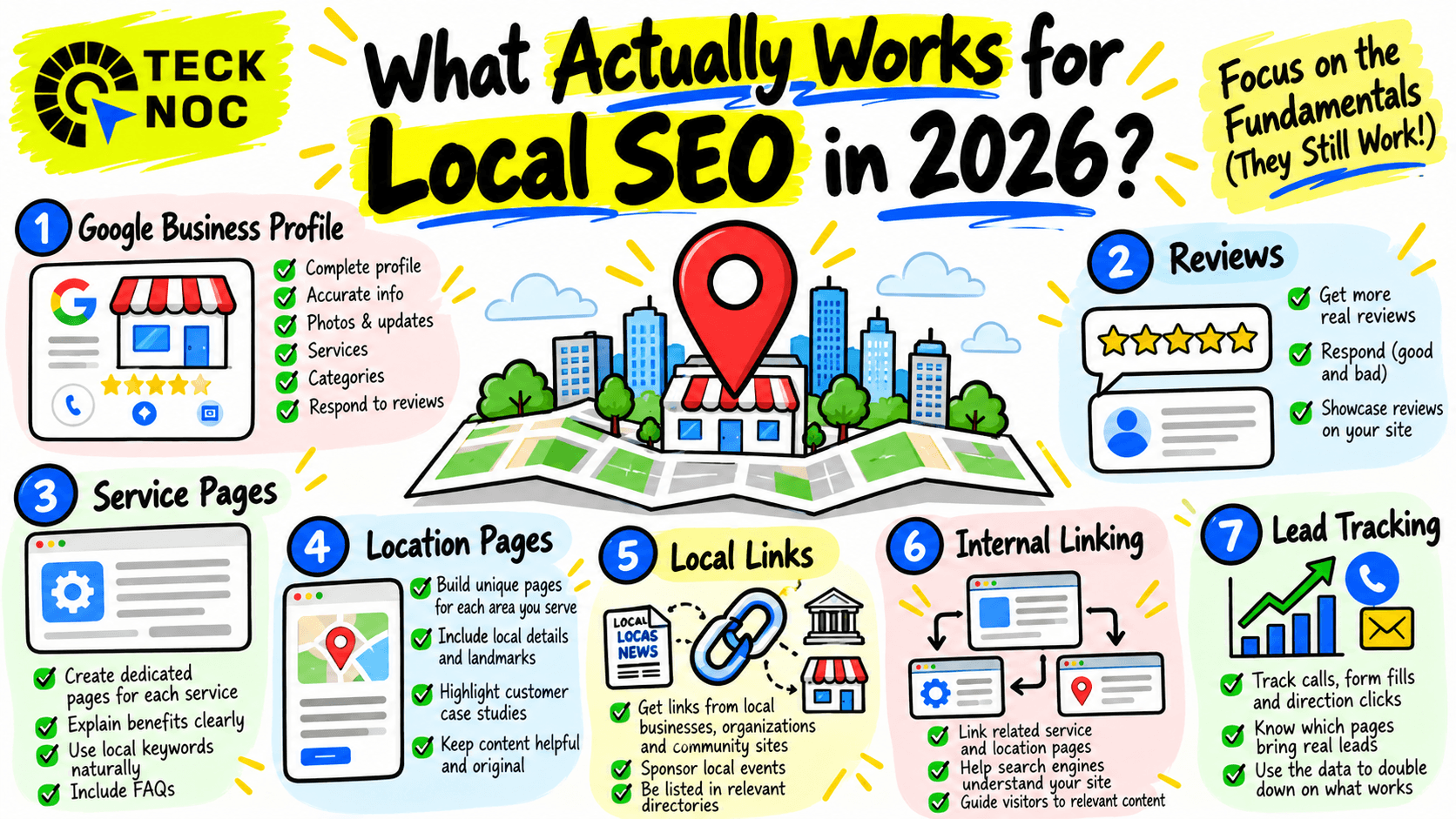
Quick Answer: What works for local SEO in 2026 is still surprisingly straightforward: a complete and accurate Google Business Profile, genuine reviews, useful service and location pages, relevant local links, strong internal linking, and a technically sound website.
Google still says local results are mainly based on relevance, distance, and prominence, so the fundamentals have not disappeared. What has changed is the way people search, the way results are displayed, and the number of places a business can be discovered. AI answers, local packs, Google Maps, organic listings, and branded searches all matter now.
The biggest mistake is chasing new tactics while ignoring the basics.
Local SEO Has Changed Less Than People Think
Local SEO in 2026 looks different on the surface, but the core principles are still familiar.
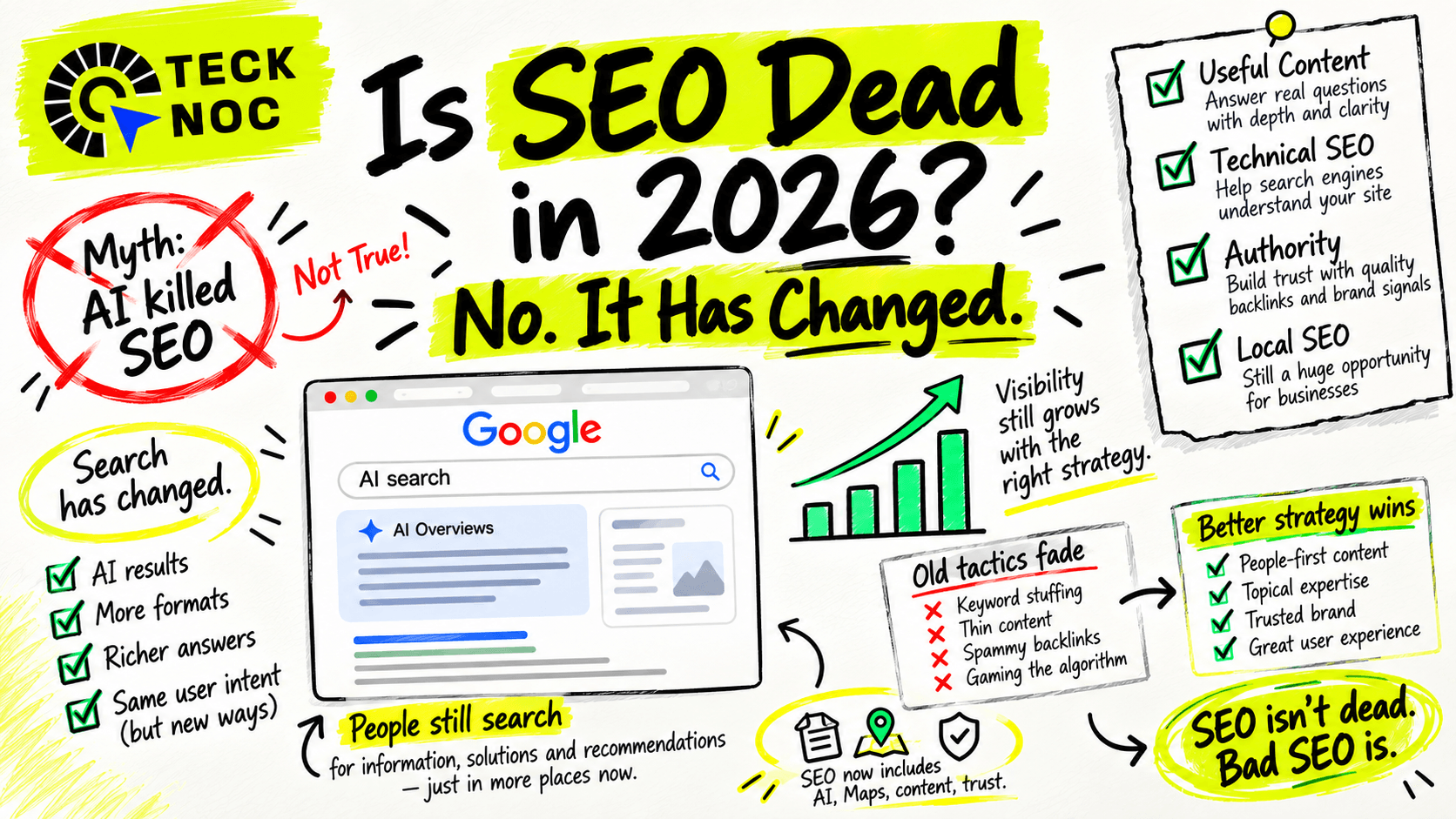
Business owners now hear about AI Overviews, ChatGPT, Google AI Mode, zero click searches, and changing click behavior. That can make it feel like traditional local SEO no longer matters.
It still does.
A person searching for a plumber, dentist, roofer, landscaper, or HVAC company usually still wants a nearby business that looks relevant, trustworthy, and easy to contact.
That means your local SEO strategy still needs to answer three basic questions:
- Is your business relevant to the search?
- Are you located close enough to serve the customer?
- Does Google have enough evidence to trust and recommend you?
That is why the fundamentals still matter.
If you want a deeper breakdown of how Google evaluates local businesses, see our guide to local SEO ranking factors.
Google Business Profile Is Still One of the Most Important Local Assets
For many local businesses, Google Business Profile is the first thing a potential customer sees.
That makes it one of the most important parts of local SEO.
A strong profile should include:
- the correct primary business category
- accurate business information
- current opening hours
- relevant services
- real photos
- correct phone number
- correct website URL
- accurate service areas where applicable
It sounds basic, but many businesses still leave profiles incomplete or outdated.
That creates problems for both Google and customers.
Your profile should clearly match what your website says.
If your website says you are a roofing company in Austin but your profile uses a broad or inaccurate category, that weakens relevance.
If your hours are wrong, customers lose trust.
If your service list is empty, you are giving Google less context about what you actually offer.
For a full breakdown, read our guide to Google Business Profile and local SEO.
Reviews Still Matter, but Trust Matters More Than Chasing Numbers
Reviews continue to matter for local businesses.
They influence customer decisions, brand trust, and local prominence.
But there is an important difference between building a healthy review profile and chasing review volume for the sake of it.
A strong review strategy should focus on:
- genuine customers
- steady review generation
- detailed feedback
- natural language
- responses from the business
- avoiding incentives or fake reviews
A business with 150 detailed and recent reviews can look far more trustworthy than one with 500 suspicious or generic reviews.
Reviews also help customers understand what your business is good at.
For example, a roofing company may receive reviews mentioning:
- storm damage repairs
- roof replacement
- insurance claims
- emergency callouts
- professionalism
- response time
That language can reinforce what the business is known for.
The goal should be trust first, not simply a bigger number.
Service Pages Still Do a Lot of the Work
One of the most effective things a local business can do is create useful pages for its main services.
Imagine an HVAC company offering:
- AC repair
- furnace repair
- HVAC installation
- duct cleaning
- emergency HVAC services
Putting all of those into one short page limits how clearly the business can explain each service.
Separate pages allow you to answer different customer questions and target different search intent.
A good service page should explain:
- what the service includes
- who needs it
- common problems
- what customers can expect
- service area
- trust signals
- next step
This helps both SEO and conversions.
It also makes the website easier to understand.
If you are unsure how many service pages your business needs, read how many pages should a website have.
Location Pages Still Work When They Are Useful
Location pages are still effective for businesses serving several cities.
But they need to be genuinely useful.
A weak location page looks like this:
We provide plumbing services in Austin.
Then the same page gets copied for Round Rock, Cedar Park, Pflugerville, and Georgetown.
That is not a strong strategy.
A better location page includes:
- services available in that area
- neighborhoods served
- local project examples
- relevant customer questions
- location specific testimonials
- travel or service information
- useful local context
The point is not to create more URLs.
The point is to create pages that actually help people in that location.
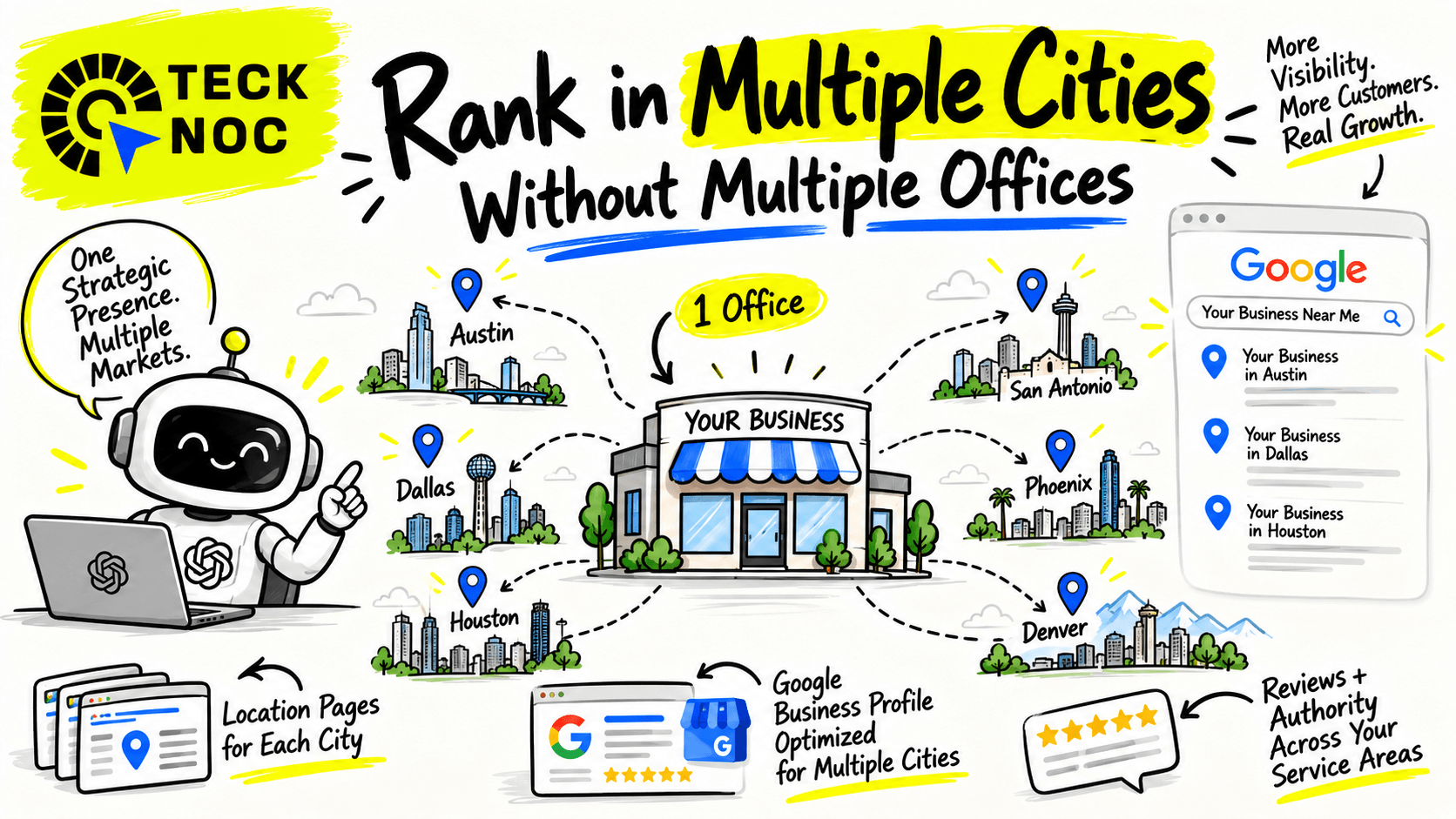
If you want to expand into multiple cities, see our guide to ranking in multiple cities.
Local Links Still Matter
Local backlinks are still useful because they help build prominence and local relevance.
But quality matters more than volume.
A strong local link might come from:
- a local chamber of commerce
- a trade association
- a local newspaper
- a supplier
- a community organization
- a local sponsorship
- a relevant business partner
These links make sense because they connect your business to the local community or industry.
Buying hundreds of unrelated links from low quality websites is very different.
That may increase a backlink count, but it does not automatically improve trust or local authority.
A smaller number of relevant links is usually more valuable than a large number of irrelevant ones.
Internal Linking Is Still Underrated
Internal linking is one of the easiest local SEO improvements to overlook.
Your website should help users and search engines understand how pages connect.
For example:
A plumbing service page can link to:
Plumbing in Austin
An Austin location page can link back to:
Emergency Plumbing
A blog about frozen pipes can link to:
Pipe Repair Services
This creates a clear relationship between topics.
It also helps visitors move through the site.
Internal linking becomes especially important as a website grows.
Without it, useful pages can become isolated.
Technical SEO Still Matters, but It Is Not the Whole Strategy
Technical SEO is important because your website needs to be accessible and usable.
At minimum, check:
- mobile usability
- page speed
- indexability
- broken links
- duplicate pages
- redirects
- crawlability
- site structure
- HTTPS
- page titles and headings
But technical SEO alone will not make a local business rank.
A technically perfect site with no useful service pages, weak reviews, poor local relevance, and no authority can still struggle.
Think of technical SEO as the foundation.
It supports everything else.
It is not the entire building.
Real Customer Questions Are Becoming More Important
Search is becoming more conversational.
People increasingly search with full questions instead of short keyword phrases.
Instead of:
roofing Austin
they may search:
how much does a roof replacement cost in Austin
or:
who can repair storm damage near me
That creates an opportunity.
Your website should answer the real questions customers ask before they call.
Useful questions might include:
- How much does the service cost?
- How long does it take?
- Do you serve my area?
- Do I need to prepare anything?
- Do you offer emergency service?
- What happens during the appointment?
- Do you provide estimates?
- What warranty do you offer?
This also helps AI search systems understand your business more clearly.
For more on this, see our guide to how to optimize your website for AI search.
What Does Not Work as Well in 2026?
Creating Hundreds of Weak Citations
Citations still have a place, but submitting the business to hundreds of low quality directories is not a complete strategy.
Focus on relevant and trustworthy listings.
Copying the Same Location Page Across Every City
Changing the city name while keeping the rest of the page identical creates weak content.
Location pages should contain real differences.
Publishing Blogs With No Search Intent
Publishing content just because “Google likes fresh content” is not enough.
Every article should have a clear reason to exist.
Buying Random Backlinks
Backlinks are useful when they are relevant and credible.
Cheap bulk links rarely provide the same value.
Keyword Stuffing
Repeating city names and service keywords unnaturally does not make a page better.
Write for clarity first.
Focusing Only on Rankings
Rankings are useful, but they are not the final goal.
A business ranking number three and getting qualified leads may be in a better position than a business ranking number one and getting the wrong traffic.
What Should a Small Business Prioritize First?
If you are starting local SEO today, I would prioritize it in this order:
- Fix and complete Google Business Profile
- Improve your main service pages
- Build a genuine review process
- Create useful location pages where appropriate
- Fix major technical issues
- Improve internal linking
- Earn relevant local links
- Answer real customer questions
- Track phone calls, forms, bookings, and leads
This order keeps the strategy practical.
There is no point chasing advanced tactics if your Business Profile is incomplete or your core service pages are weak.
Stop Measuring Local SEO Only by Rankings
This is one of the biggest mistakes businesses make.
Local SEO should be measured by business outcomes.
Track things like:
- phone calls
- contact form submissions
- bookings
- direction requests
- qualified leads
- revenue
- landing pages that convert
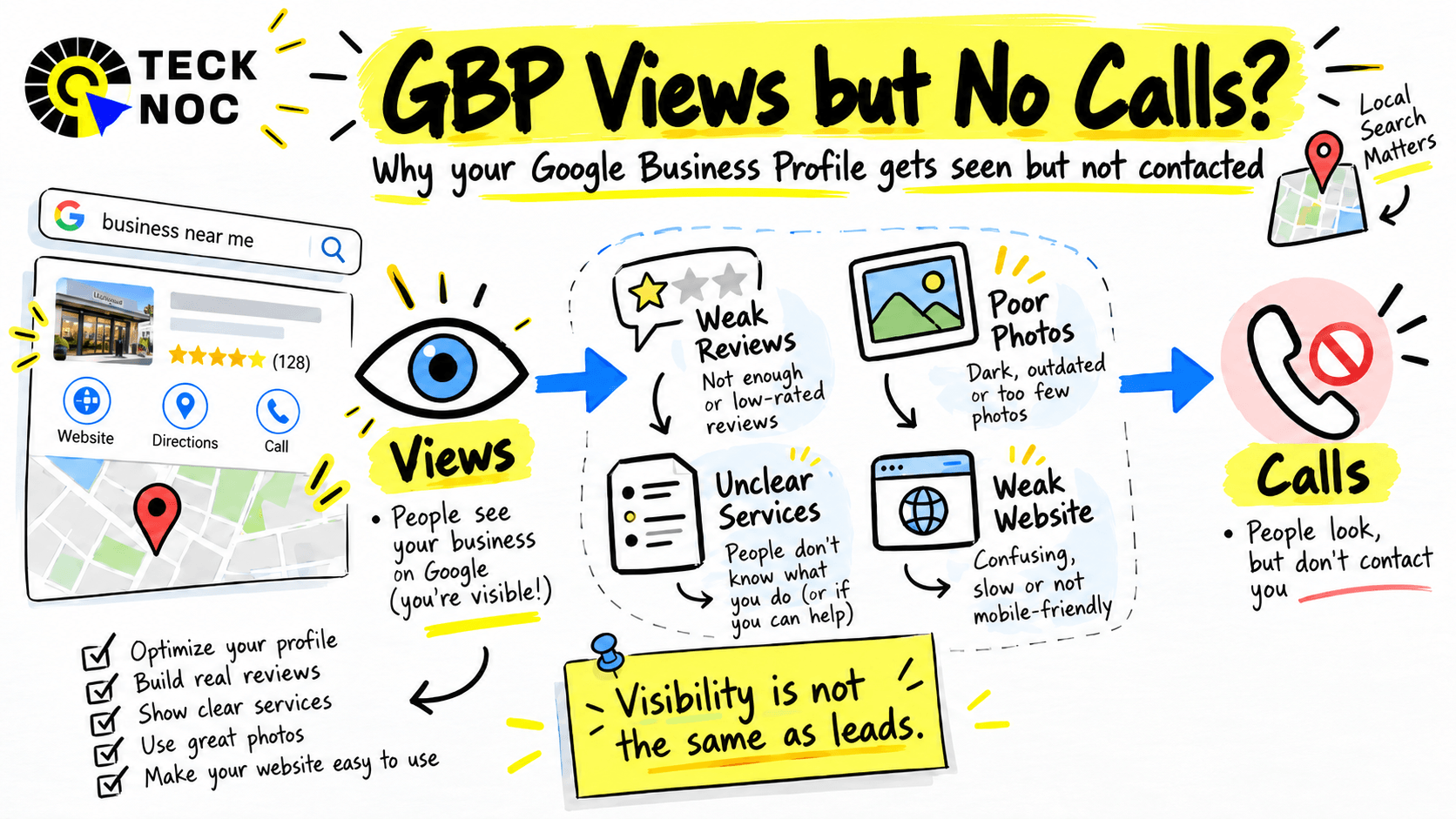
- Google Business Profile interactions
Rankings still matter.
But they should support business growth.
If traffic is increasing but conversions are not, you may have a website or conversion problem.
That is where conversion rate optimization for local businesses becomes important.
Does Local SEO Still Work in 2026?
Yes.
Local SEO still works in 2026, especially for businesses that rely on customers in a specific geographic area.
What has changed is the environment around it.
Customers now discover businesses through:
- Google Maps
- local packs
- organic search
- AI generated answers
- reviews
- branded searches
- social media
- direct recommendations
That means local SEO should not be treated as one isolated ranking tactic.
It should be treated as a complete local visibility strategy.
The businesses that perform best are usually the ones that are clear, credible, useful, and consistent across every place customers can find them.
Final Thoughts: What Actually Works for Local SEO in 2026?
The local SEO strategies that work in 2026 are not secret tricks.
They are the fundamentals done properly.
A complete Google Business Profile.
Useful service pages.
Strong location relevance.
Genuine reviews.
Relevant links.
Clear internal linking.
A technically sound website.
Helpful answers to customer questions.
And proper lead tracking.
The businesses that consistently do those things are usually in a stronger position than competitors chasing shortcuts.
Need Help Improving Your Local SEO?
Local SEO works best when your Google Business Profile, website, reviews, service pages, location pages, and conversion tracking all support each other.
TeckNoc helps local businesses improve search visibility, strengthen Google Maps presence, and turn more local searches into qualified leads.
If you want a strategy built around your actual market, competition, and service areas, explore our SEO services in Texas or contact TeckNoc to discuss your goals.
FAQs
Does local SEO still work in 2026?
Yes. Local SEO still works for businesses that depend on customers in specific locations. Google Business Profile, reviews, service pages, local relevance, and authority remain important.
What is the most important part of local SEO?
There is no single factor, but Google Business Profile, relevance, reviews, website quality, and local authority are among the most important areas to focus on.
Does Google Business Profile still matter for local SEO?
Yes. Google Business Profile remains one of the main ways local businesses appear in Google Maps and local search results.
Do reviews help local SEO?
Reviews can support local prominence and customer trust. Genuine reviews are especially important for helping potential customers compare businesses.
Are local citations still important?
Relevant citations can still be useful, especially on trusted local and industry platforms. However, mass submission to low quality directories is not a complete local SEO strategy.
Do location pages still work?
Yes, when they provide useful and unique information for each location. Copying the same page and changing the city name is much less useful.
Do backlinks help local SEO?
Yes. Relevant links from trusted local, industry, and community websites can strengthen authority and prominence.
How long does local SEO take?
There is no fixed timeline. Results depend on competition, location, website quality, Business Profile strength, reviews, authority, and the condition of the existing site.
Does AI search change local SEO?
Yes, mainly in how people discover businesses and how information is presented. The need for clear, accurate, useful business information has become even more important.
What should a small business do first for local SEO?
Start by fixing Google Business Profile, improving core service pages, building a genuine review process, and making sure the website is technically sound and easy to use.